Vertical Software and the Industrial Renaissance
The most interesting software businesses of the next decade will not look like horizontal SaaS. They will look like operating systems for industries that have never had one — and the operators building them now will own categories for a generation.
For most of the last fifteen years, software meant horizontal SaaS — broad tools sold to anyone who would buy them. The unit economics were extraordinary, the distribution was new, and the market rewarded scale above almost everything else. That era produced an enormous number of valuable companies and an even larger number of forgettable ones.
That era is closing. The remaining structural opportunity sits inside vertical software: deeply specialized platforms built for specific industries that have outgrown spreadsheets and email but never had real tooling built for them. Field services. Manufacturing. Energy operations. Real estate management. Logistics. Specialty trades. Categories where domain knowledge is the moat, where buyers are difficult to reach without specialist credibility, and where the eventual platform winner can become genuinely irreplaceable.
Why Horizontal Has Plateaued
Horizontal SaaS has not stopped working. It has stopped producing easy wins. The categories worth winning have largely been won. The remaining greenfield surfaces are crowded, expensive to acquire customers in, and structurally vulnerable to platform-level commoditization as foundation models flatten the differentiation between feature sets.
Vertical software does not face the same dynamic. Domain knowledge is genuinely difficult to acquire. Distribution is genuinely difficult to build without years of credibility inside the industry. And the customers, once won, behave very differently than horizontal SaaS customers. They stay longer. They expand more. They are far less price-sensitive once a platform becomes embedded in their core operations.
What Makes a Vertical Worth Building For
Not every industry warrants a dedicated platform. The industries that do share a common profile. They are large enough to support a meaningful business but small enough that horizontal players have not bothered to serve them. They are operationally complex in ways that generic tools cannot capture. They have a clear set of recurring workflows that, once digitized, generate compounding data advantages. And they tend to have buyers who are quietly desperate for tooling that finally takes their work seriously.
When all four conditions are present, the eventual winner is the operator who shows up with genuine domain credibility and ships software that respects the realities of the work. Generic competitors lose not because their software is worse but because the buyers can tell — within minutes — who actually understands the industry and who is selling them a repurposed horizontal product.
The Industrial Renaissance Is Already Underway
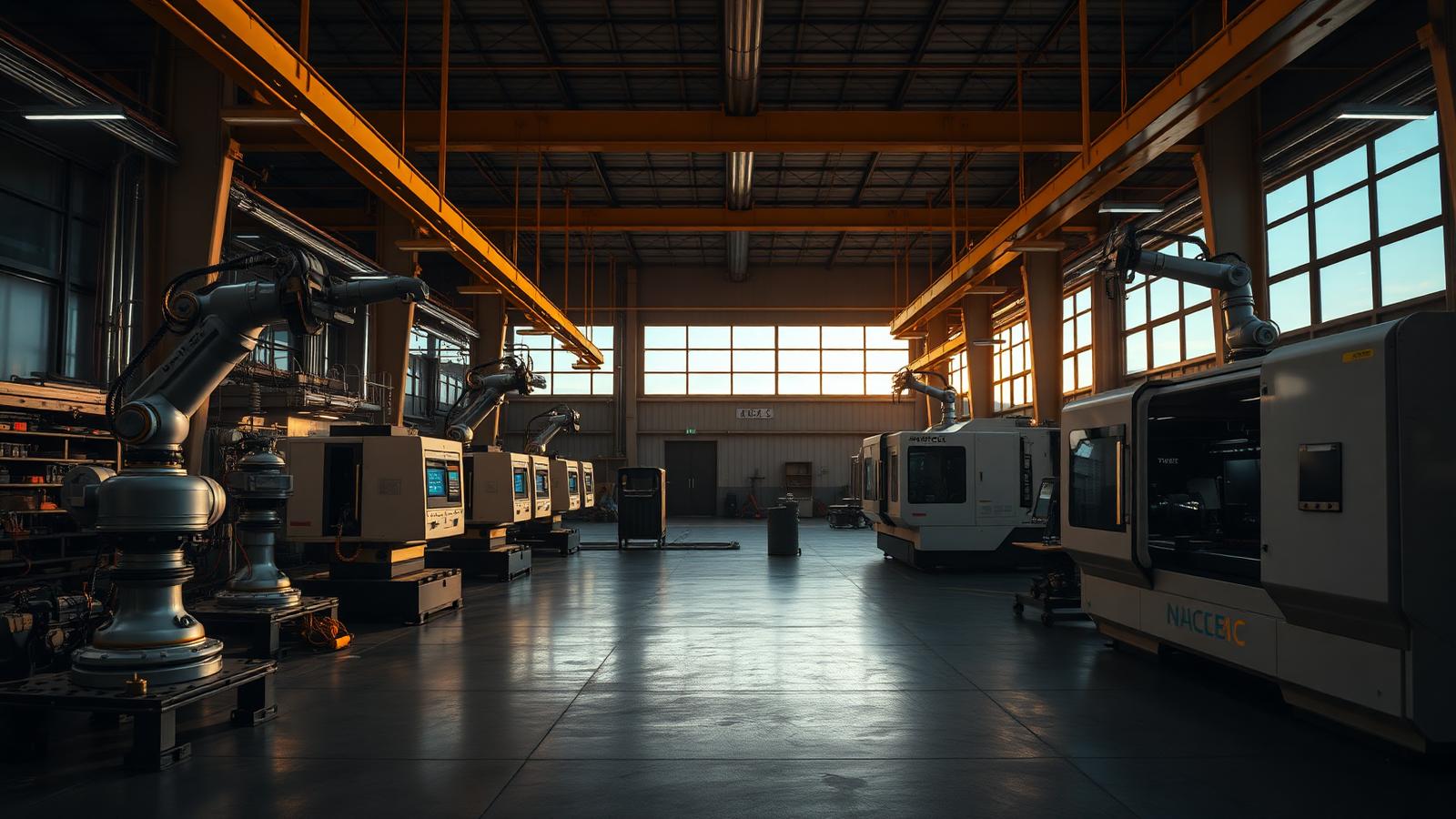
The most consequential software being built right now is, paradoxically, the least visible. It is being built for manufacturers, energy operators, field-service companies, logistics platforms, and the industrial backbone of the real economy. It is being built by small, focused teams who care more about shipping the right product than about reaching the broad startup audience.
Layered on top of this software is a second generation of capability — applied AI used as connective tissue rather than as a feature. The combination is transformative. Industries that have run on tribal knowledge and partial digitization for decades are quietly being given an operating system for the first time. The companies running on that operating system gain significant cost, speed, and quality advantages over those that do not. The advantage compounds.
How We Operate in This Space
Our build practice exists at this intersection. We design and ship vertical platforms for the industries inside our own portfolio first, where we have the operating credibility, the data, and the long-term incentive to do the work properly. Selectively, we extend that work to outside operators whose problems warrant bespoke engineering and whose horizon matches our own.
We build with the same rigor we would apply to consumer-grade products — because the operators who use our software notice the difference, and because the categories we choose to build for tend to reward longevity more than scale. The platforms we ship are not designed to be acquired in three years. They are designed to be the system of record for a category in fifteen.
The industrial renaissance is being engineered, quietly, one vertical at a time. The advantage belongs to the teams shipping the systems before the incumbents realize they needed them. We intend to keep doing that work, on our own platforms and on a small number of outside engagements where the fit is unmistakable.
"Software is leverage. We build the systems our portfolio depends on."
Conversations begin privately. For partnership, capital, or media inquiries, reach our team at media@fraziers.com.
.%20Wide%20aspect%2C%20high%20detail%2C%20magazine-grade.?width=1200&height=675&nologo=true&seed=4840)
.%20Wide%20aspect%2C%20high%20detail%2C%20magazine-grade.?width=1200&height=675&nologo=true&seed=7211)
.%20Wide%20aspect%2C%20high%20detail%2C%20magazine-grade.?width=1200&height=675&nologo=true&seed=7478)