Solar as the New Sovereign Asset Class
Energy is no longer a commodity sector. It is the most consequential real-asset class of our lifetime, and utility-scale solar paired with storage now sits at the center of it.
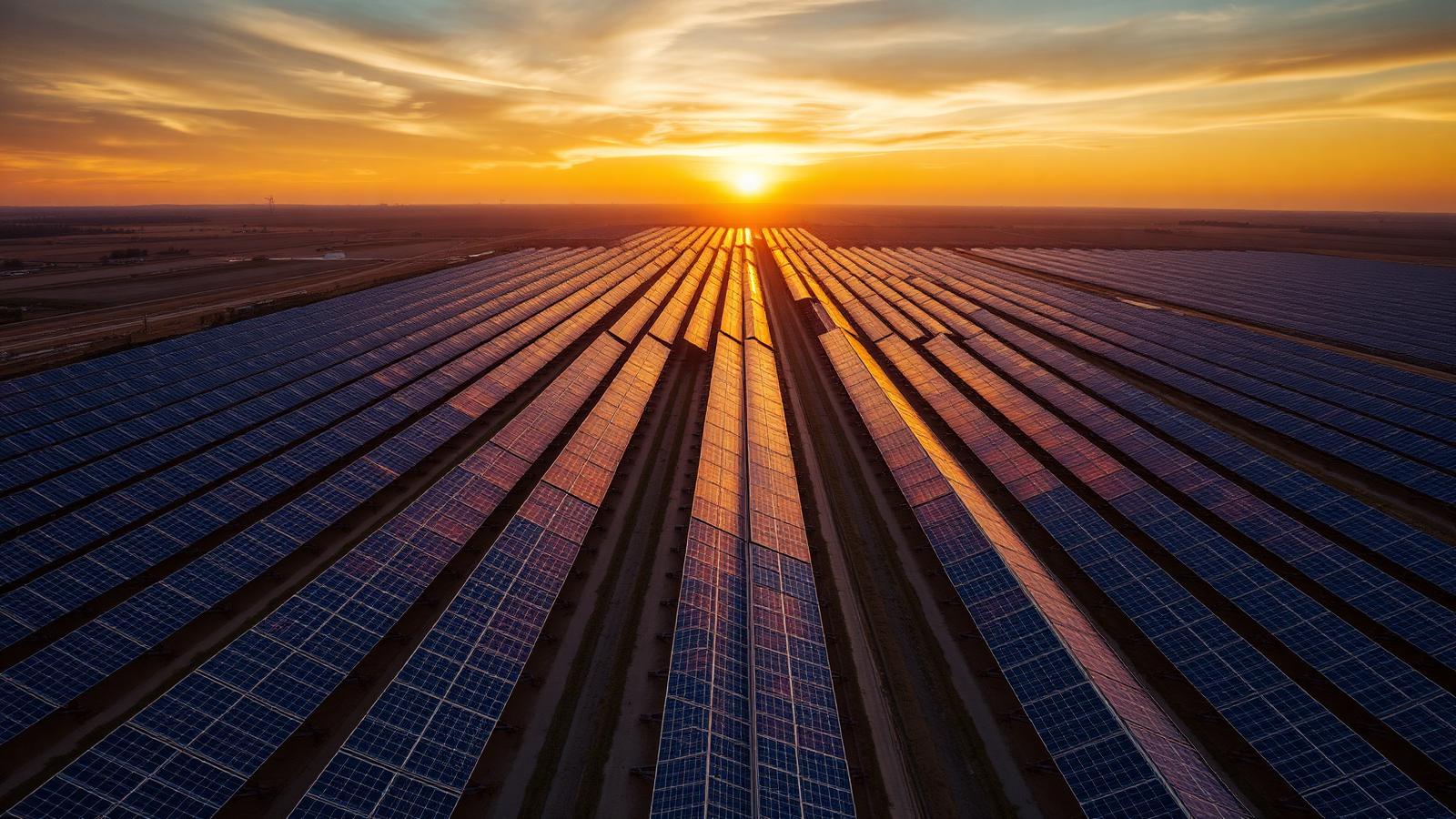
For most of the last century, energy was treated as a cyclical commodity exposure. Allocators sized it for inflation hedging, traders sized it for volatility, and the rest of the institutional world more or less ignored it. That framing is no longer adequate.
Energy generation — particularly utility-scale solar paired with storage — has quietly become the closest analogue we have to sovereign infrastructure. Long-duration. Contractually visible. Structurally inflation-hedged. Indispensable. The category now belongs in the conversation alongside core real estate and core infrastructure, not adjacent to commodities.
The Math Has Already Won
Levelized costs of solar plus storage now sit beneath nearly every alternative on a marginal basis in the markets that matter. The combination of falling module prices, hardened balance-of-system costs, and the maturation of lithium-iron-phosphate storage chemistries has reset the curve permanently. We are no longer waiting for the technology to become competitive. It already is.
What changed alongside the cost curve is the financing architecture. Federal credits, state-level programs, and utility tariffs have stacked into a structure that institutional capital can now model with conviction. Tax equity behaves like a stable annuity. Project-level debt prices as the long-duration asset it actually is. Sponsor equity earns the spread between the two — and that spread has become one of the more attractive risk-adjusted returns available in real assets today.
Why It Looks Sovereign
Three properties make a real-asset class behave like sovereign infrastructure. The cash flows must be long-duration. They must be contractually anchored to a counterparty with extreme credit durability. And they must be structurally indexed to the price level over time.
Utility-scale solar paired with storage now satisfies all three. Power purchase agreements run twenty to thirty-five years. Counterparties are typically investment-grade utilities or the rated subsidiaries of large corporate offtakers. And the underlying commodity — electricity — remains the most reliable real-economy input there is, with a price level that historically tracks or outpaces broader inflation.
That is a very different risk profile from the commodity-cycle framing the category has historically been assigned. It deserves a very different allocation framework as a result.
Where the Operating Edge Sits
The asset class is no longer speculative. The advantage now belongs to operators with the discipline to treat it that way. Specifically, the durable edge has moved from technology selection to four less glamorous capabilities.
First, origination — particularly land control in markets with constrained interconnection capacity. Second, capital structuring — the ability to layer tax equity, project debt, and sponsor capital with precision. Third, EPC and procurement discipline — protecting margin through the construction window where most projects bleed value. And fourth, long-cycle asset management — operating decisions over a thirty-year holding period have more total impact than the day-one investment thesis ever did.
Our practice operates across all four. We treat each project as a multi-decade obligation to investors, to landowners, and to the grid we connect to. That mindset changes how we underwrite. It changes how we negotiate land control. It changes how we select operating partners. And it changes which projects we are willing to walk away from.
The Conversation We Are Having
Capital partners are increasingly asking the right question — not whether to allocate to energy, but how to access the category through operators who treat it as core infrastructure rather than as a fund vintage. Landowners and developers are asking how to find counterparties who will steward their projects across decades rather than flip them at a milestone.
We engage with both audiences quietly and on a select basis. The asset class is no longer interesting because it is new. It is interesting because it has matured into something durable — and the operators who recognize that early will be the ones who compound the advantage.
"Energy is the most important asset class of the next fifty years."
Conversations begin privately. For partnership, capital, or media inquiries, reach our team at media@fraziers.com.
.%20Wide%20aspect%2C%20high%20detail%2C%20magazine-grade.?width=1200&height=675&nologo=true&seed=4840)
.%20Wide%20aspect%2C%20high%20detail%2C%20magazine-grade.?width=1200&height=675&nologo=true&seed=7211)
.%20Wide%20aspect%2C%20high%20detail%2C%20magazine-grade.?width=1200&height=675&nologo=true&seed=7478)