Sovereign Compute: Why the Next Decade Belongs to Owners of Intelligence Infrastructure
Compute is quietly becoming the most strategically scarce resource of the modern economy. The operators who own it — at the rack, the substation, and the model layer — will define the next cycle.
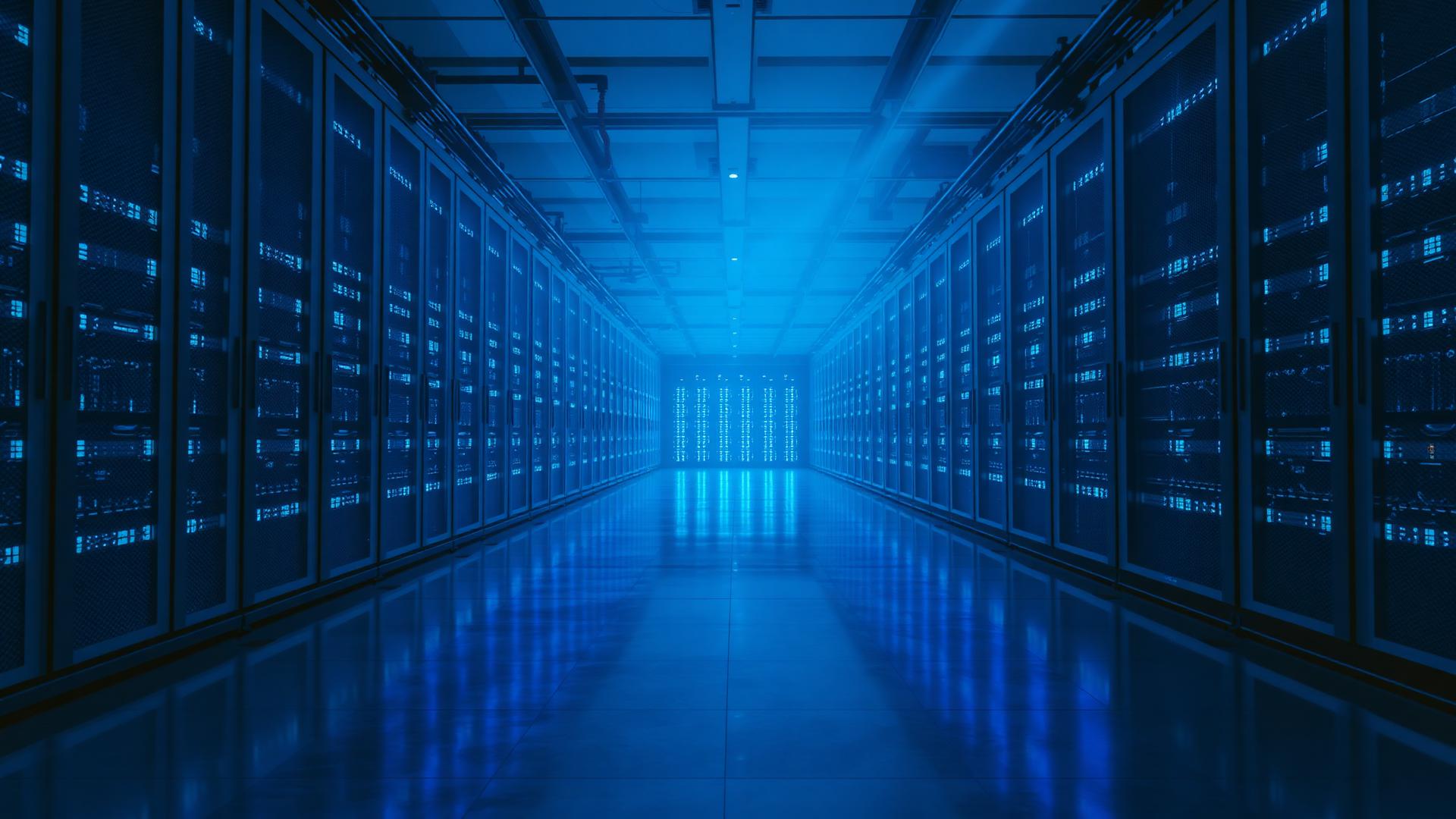
For most of the last two decades, compute behaved like a commodity. It was abundant, cheap, and largely invisible — a line item rented from a handful of hyperscalers and forgotten. That era is ending. Compute is becoming a sovereign asset class, and the operators who recognize the shift early will compound advantages that latecomers cannot buy at any price.
The reason is structural. The most valuable workloads of the next ten years — frontier models, real-time inference embedded inside operating businesses, simulation, autonomy, defense-grade analytics — share a single characteristic. They are insatiable consumers of high-density power, premium silicon, and low-latency interconnect. The supply of all three is constrained for reasons that capital alone cannot solve quickly.
The New Geography of Power
The binding constraint on compute is no longer chips. It is energy, delivered at the right voltage, in the right place, with the right interconnect, under a regulatory regime that allows it to scale. That is a real-asset problem, not a software problem — and it favors operators who understand land, utilities, permitting, and long-cycle infrastructure development.
We have spent years quietly assembling capabilities at this intersection: generation assets, storage, substation-adjacent land, and the operating discipline to deliver power to demanding tenants on schedule. The same posture that allowed earlier operators to build cell towers, fiber, and data-center campuses now applies to the next layer of digital infrastructure — and the returns available to disciplined builders are, in our considered view, generational.
Compute as Optionality
The most underappreciated property of owned compute is optionality. A megawatt of contracted, interconnected capacity can be deployed against training, inference, scientific workloads, or sold into the merchant market depending on where margins are richest in any given quarter. That flexibility is unavailable to operators who rent.
Optionality compounds in environments where the underlying technology is moving quickly. Model architectures will continue to shift. Silicon roadmaps will continue to surprise. The workloads that dominate three years from now are unlikely to be the workloads that dominate today. Owners of the underlying physical layer participate in every regime. Renters participate only in the one they signed for.
The Quiet Repricing of Real Assets
What looks like a technology cycle is, underneath, a real-asset repricing. Land near transmission. Water rights for cooling. Long-duration power purchase agreements. Permits that took a decade to assemble. These are the inputs that frontier intelligence runs on, and they are being revalued in real time by buyers who finally understand what they are bidding for.
Our practice is to acquire and develop these inputs with the patience of a multi-decade owner, not the urgency of a fund with a return clock. The math rewards patience here. The assets do not need to be flipped to compound. They need to be operated, expanded, and held while the world reorganizes around them.
How We Engage
We partner quietly with developers, utilities, landowners, and operating tenants who want a counterparty capable of underwriting infrastructure on a horizon long enough to actually build it. We are not interested in speculative land banking or in financial structures that depend on a particular exit window. We are interested in owning the physical layer that intelligence runs on, and in operating it with the discipline of a long-tenured infrastructure house.
The next decade will reward two things: the conviction to build real assets in a world that has forgotten how, and the patience to hold them while their strategic value is recognized. Sovereign compute is the cleanest expression of both, and we intend to be among its most disciplined owners.
"Whoever owns the compute owns the optionality."
Conversations begin privately. For partnership, capital, or media inquiries, reach our team at media@fraziers.com.
.%20Wide%20aspect%2C%20high%20detail%2C%20magazine-grade.?width=1200&height=675&nologo=true&seed=4840)
.%20Wide%20aspect%2C%20high%20detail%2C%20magazine-grade.?width=1200&height=675&nologo=true&seed=7211)
.%20Wide%20aspect%2C%20high%20detail%2C%20magazine-grade.?width=1200&height=675&nologo=true&seed=7478)