Real Estate in a Higher-for-Longer Regime
The cost of capital has reset. Most of the real estate world has not. The opportunity belongs to operators willing to underwrite to the new reality without flinching.
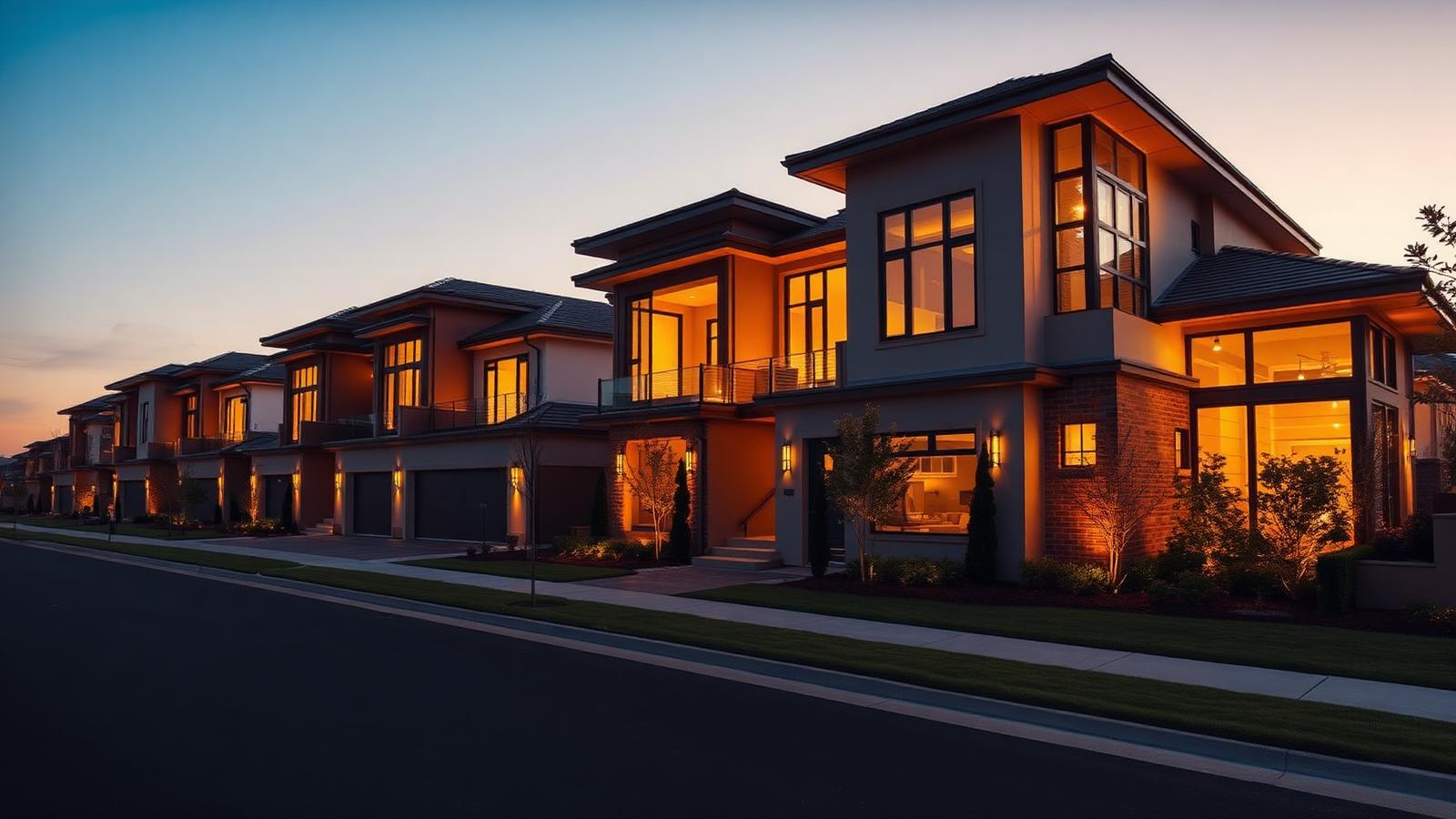
Real estate is, at its core, a basis business. The operators who win over multi-decade horizons are the ones who refuse to chase prices — and who buy when the rest of the market is still hoping for a return to a regime that is not coming back.
The repricing happening across asset classes today is not a bug. It is the long-overdue reflection of a higher cost of capital. Most owners are still anchored to the assumptions of the prior cycle. That anchoring is what creates opportunity for the next one.
The Anchor Most Owners Cannot Drop
Every cycle of real estate accumulates a set of unstated assumptions that everyone in the market eventually treats as permanent. Cap rates compress forever. Refinancings always work. Cash-on-cash yields can be modeled off optimistic exit assumptions because exit assumptions always come true. None of those statements survives a regime change. All of them quietly governed underwriting for the better part of a decade.
The transition out of that regime is psychological as much as financial. Owners holding assets purchased at prior-cycle assumptions are slow to mark them, slower to sell them, and slowest of all to recognize that the next cycle requires different math. The result is a long, awkward period during which liquidity is constrained, transaction volume is depressed, and prices drift downward in a way that becomes obvious only in retrospect.
That awkward period is the entry point. Operators with patient capital, honest underwriting, and the willingness to wait for sellers to capitulate find themselves taking generational positions while the rest of the market is still hoping the prior regime returns.
What Honest Underwriting Looks Like
Honest underwriting in a higher-for-longer regime starts with refusing to model exit caps tighter than entry caps. It models debt at conservative rates with conservative refinance assumptions. It treats reversionary value as a residual rather than as the central source of return. It assumes leasing absorption that matches the trailing market rather than the optimistic forecast. It builds the deal off in-place yield and lets appreciation be a bonus rather than the thesis.
This is not pessimism. It is discipline. Deals that pencil under that framework actually compound. Deals that require optimistic exit assumptions to clear hurdles do not, regardless of how confidently they are presented in the investment committee memo.
Where We Are Concentrating
Our practice is concentrated across residential development, income-producing commercial holdings, and integrated mixed-use projects in markets we believe will compound over the next two decades. The geographies we focus on share a common profile: durable in-migration, defensible employment bases, reasonable regulatory environments, and the kind of demographic momentum that does not unwind in a single cycle.
Within those markets, we assemble land positions quietly and patiently. We develop on cycles that match our actual ownership horizon rather than on cycles that match a fund's exit clock. And we partner — selectively — with developers, family offices, and institutional capital on opportunities that fit our underwriting standard.
The Privately-Held Advantage
There is a structural reason most of the best real estate in America is held in private vehicles by operators who never give interviews. The discipline of permanent ownership produces fundamentally different decisions than the discipline of fund-vintage ownership. Capital improvements are evaluated on twenty-year payback, not five. Tenant relationships are managed for retention across decades. Repositioning decisions are not driven by an exit clock that does not actually serve the asset.
Our practice is built on that posture. We are not selling a fund. There is no hurdle to clear by a particular date. We hold what compounds. We sell when stewardship is better served elsewhere. And we let the basis advantage — the result of having bought patiently in a regime most owners refused to acknowledge — quietly do its work.
The next vintage of real estate winners will be the operators who treated this period as a generational entry point and who had the structural patience to act on that conviction. We intend to be among them.
"We underwrite each asset as if we will own it forever."
Conversations begin privately. For partnership, capital, or media inquiries, reach our team at media@fraziers.com.
.%20Wide%20aspect%2C%20high%20detail%2C%20magazine-grade.?width=1200&height=675&nologo=true&seed=4840)
.%20Wide%20aspect%2C%20high%20detail%2C%20magazine-grade.?width=1200&height=675&nologo=true&seed=7211)
.%20Wide%20aspect%2C%20high%20detail%2C%20magazine-grade.?width=1200&height=675&nologo=true&seed=7478)