Compute, Electrification, and the Repricing of Industrial Real Estate
The convergence of AI infrastructure demands and grid capacity is fundamentally revaluing the built environment, creating asymmetries that patient capital can exploit.
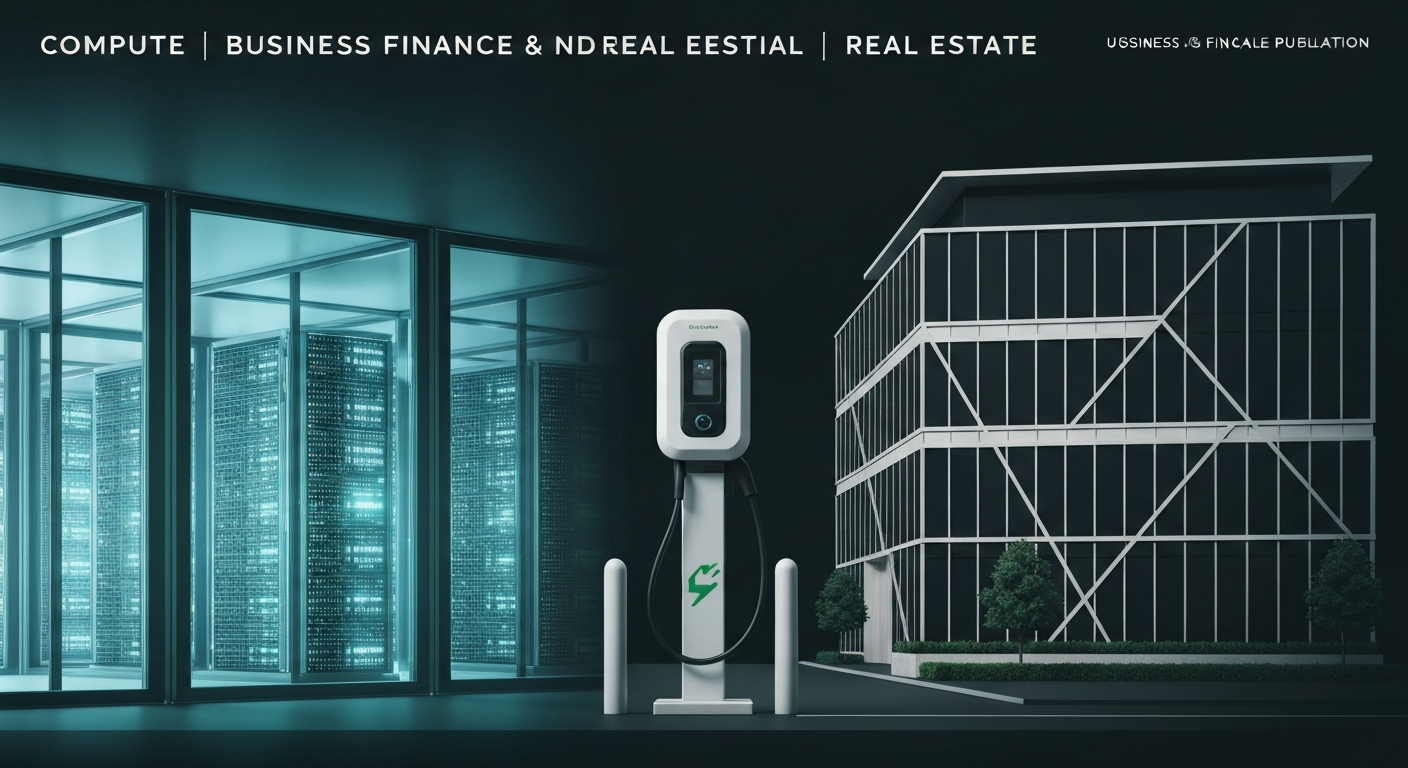
The industrial real estate market is undergoing a fundamental repricing, driven not by traditional metrics of logistics efficiency or labor access, but by something more elemental: the capacity to deliver reliable, scalable electrical power. As artificial intelligence workloads migrate from theory to production, and as electrification reshapes manufacturing and transportation, the built environment faces a reckoning. Properties once valued for their proximity to highways or ports now command premiums—or suffer discounts—based on their distance from substations and their allocation within increasingly constrained grid capacity. This is not a cyclical shift. It represents a structural reordering of how we value space, infrastructure, and the intersection of both.
The New Constraint
For decades, industrial real estate operated within a well-understood framework. Tenant demand centered on clear-span warehouses, loading dock configurations, ceiling heights, and last-mile proximity to population centers. Power was assumed, a background utility priced into operating expense pass-throughs and rarely scrutinized during underwriting. That assumption no longer holds. The emergence of training clusters and inference infrastructure has created a new category of tenant with energy requirements that dwarf those of traditional occupiers. Where a distribution center might draw two to five watts per square foot, compute-intensive facilities can demand fifty to one hundred times that density. The grid, built for a different era and a different load profile, cannot accommodate this demand without significant lead times, capital expenditure, and in many cases, fundamental reconfiguration.
This mismatch has produced a bifurcation in asset values that legacy pricing models fail to capture. Properties with existing substations, backup generation, and utility agreements that permit expanded loads are trading at premiums that reflect not their physical condition but their embedded optionality. Conversely, assets in regions where interconnection queues stretch years into the future, or where utilities lack generation capacity to support new industrial loads, face a quiet devaluation. The market is beginning to price in stranded capacity risk—the possibility that a well-located, well-maintained property may be functionally obsolete if it cannot deliver the power profile that next-generation tenants require.
The Electrification Overlay
Parallel to the compute thesis, a broader electrification trend is reshaping industrial tenant composition and space utilization. The transition of freight logistics, manufacturing processes, and material handling to electric systems introduces new infrastructure requirements within the four walls of existing buildings. Charging infrastructure for fleet vehicles, upgraded electrical service for automated systems, and battery storage for load management all demand capital that was not contemplated in previous development cycles. These are not marginal adjustments. They represent a rewiring of the built environment, both literally and economically.
The capital intensity of this transition creates opportunities for owners willing to reposition assets ahead of tenant demand. Properties that can be economically upgraded to support high-density electrification will command longer lease terms, higher rents, and greater tenant retention. Those that cannot—either due to legacy electrical service limitations, restrictive utility agreements, or prohibitive retrofit costs—will slip into a secondary tier of the market. The spread between these two categories is widening, and it is widening quietly, without the fanfare that typically accompanies market dislocations. This is a repricing that favors those with the foresight to act before the gap becomes consensus.
Geography, Grid, and Asymmetric Returns
Geography matters differently now. Proximity to fiber networks and interconnection points, access to low-cost baseload power, and relationships with utilities capable of fast-tracking service upgrades have become as material to asset value as any physical attribute of the building itself. Certain regions—those with deregulated power markets, surplus generation capacity, or forward-thinking utility commissions—are emerging as disproportionate beneficiaries of this shift. Other markets, constrained by aging infrastructure or regulatory inertia, face structural headwinds that no amount of capital expenditure can overcome in the near term.
This geographic divergence creates asymmetries that patient, operationally sophisticated capital can exploit. The ability to underwrite not just the real estate but the energy infrastructure that supports it, to navigate utility procurement processes, and to structure tenant agreements that align power delivery with revenue, becomes a source of durable competitive advantage. The winners in this cycle will not be those who deploy capital most quickly, but those who deploy it most precisely, in markets and assets where the convergence of compute demand, electrification tailwinds, and grid capacity creates compounding returns.
How We Engage
Our approach to this opportunity is grounded in operational control and long-term asset ownership. We do not speculate on future tenant demand; we engineer for it. We acquire properties where power infrastructure can be enhanced or where existing capacity is underutilized and mispriced. We partner with utilities, invest in on-site generation and storage where economics justify it, and structure lease agreements that align our interests with those of tenants whose growth depends on reliable, scalable energy delivery. We treat real estate not as a passive asset class but as a platform for infrastructure deployment, and we underwrite not to market comps but to the fundamental economics of electrons, fiber, and compute density. This is a decade-long thesis, and we are building accordingly.
"Power availability has become the binding constraint, and the properties that can deliver it are being revalued accordingly."
Conversations begin privately. For partnership, capital, or media inquiries, reach our team at media@fraziers.com.
.%20Wide%20aspect%2C%20high%20detail%2C%20magazine-grade.?width=1200&height=675&nologo=true&seed=4840)
.%20Wide%20aspect%2C%20high%20detail%2C%20magazine-grade.?width=1200&height=675&nologo=true&seed=7211)
.%20Wide%20aspect%2C%20high%20detail%2C%20magazine-grade.?width=1200&height=675&nologo=true&seed=7478)